
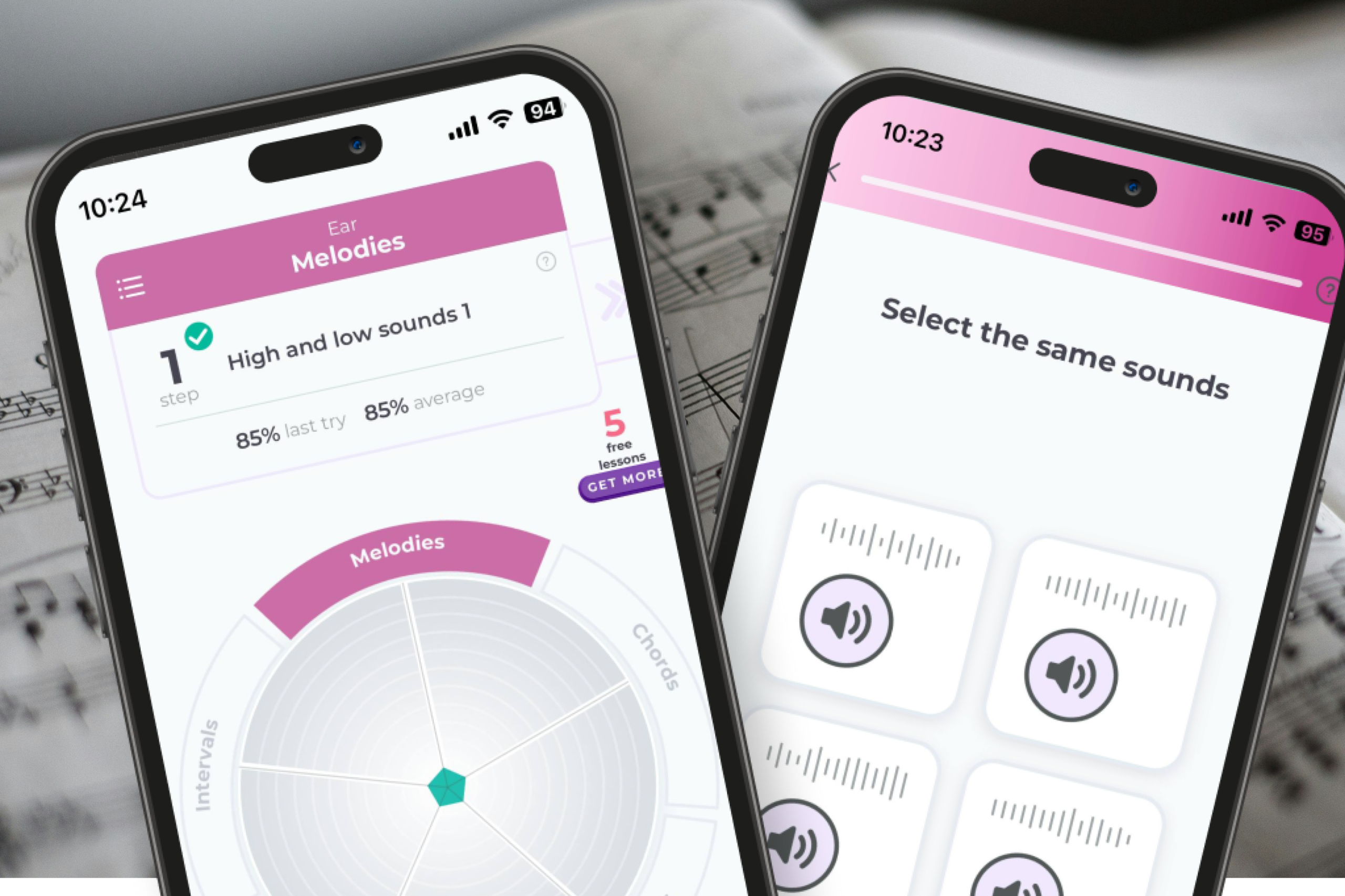
Introduction to Auditory Training — Why Auditory Development Matters for Everyone
In today’s world, the skill of perceiving sounds accurately and clearly is valued not only by musicians but by every person who strives for effective communication and cognitive growth. When mastering a new musical instrument or even during ordinary speech listening, auditory development becomes a key success factor. This involves ear training; listening tips; interval recognition; chord identification for building aural skills, audio awareness, and pitch accuracy.
Why then is auditory training not just a useful exercise but an essential part of learning? The answer lies in the very process of sound perception: the brain learns to highlight necessary details, to separate noise from music, to recognize tonality and rhythm. Without careful work on this aspect, one encounters barriers in learning, loss of motivation, lack of progress feeling. (Listening practice and critical listening accelerate skill development.)
Attention should be drawn to auditory development for the following main reasons:
- Improving musical intuition and creative thinking
- Improved concentration and memory
- Formation of a solid base for further learning of technique and theory.
- Lower levels of fatigue when continuously listening and analyzing a sound
Not just receiving information, but by opening to new sound nuances, the listener starts to feel and understand it, making both the learning process and life brighter and more rich. (Melody detection, tonal recognition, and harmonic analysis benefit from practical exercises and interval drills.) — More tools and listening modules are available at https://talentedmusicapp.com/en.
Principles of Auditory Training in the Talented System
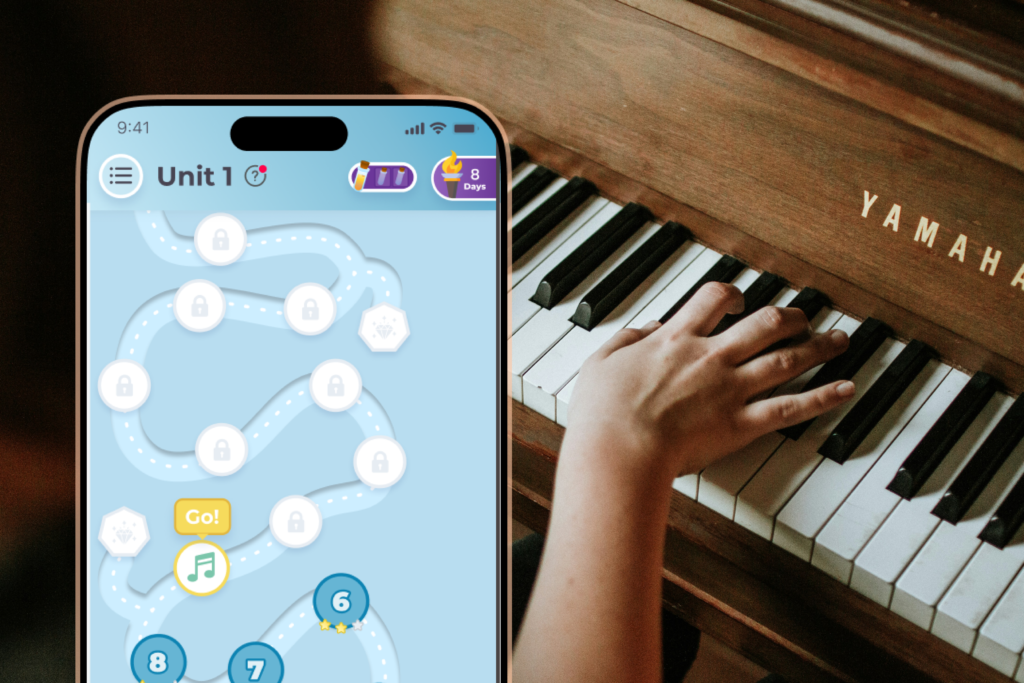
The whole method is based on the comprehensive approach, joining technological capabilities with scientifically grounded methods. Passive listening is not the foundation, but active work on auditory tasks with gradual complication. (The Talented app provides training sessions, musical dictation, and chord ear practice to reinforce interval recognition and chord identification.)
The key principles of our system :
- Gradualness: from simple tasks, the user then moves smoothly to more complicated ones-from recognition of individual notes and sounds to the analysis of harmonic connections, rhythmic structures. Stress levels decrease, and such an approach supports motivation.
- Feedback: The user always checks the answers, making it easier to quickly get the mistakes corrected and reinforce the correct solutions.
- Adaptability: Training automatically adjusts to each individual’s level and progress, avoiding excessive boredom or overload.
- Interactivity: the introduction of game elements allows making sessions engaging and ensures regular practice.
To visually represent the logic of the training process, key stages can be formatted as a table:
| Stage | Tasks | Result |
| Sound Recognition | The perception of pure tones | Basic auditory formation |
| Interval Identification | Determination of distances between sounds | Musical sense development |
| Rhythm Analysis | Listening to and repeating rhythmic patterns | Ability to feel music’s pulse |
| Harmony Recognition | Highlighting chords and their types | Understanding music structure |
It turns auditory training into a component of music education, rather than just an additional exercise. The main goal is teaching the user to hear deeper and more precisely, unveiling new facets of musical art. (Further ear training with listening tipssupports reading confidence and pitch accuracy.)
Key Obstacles and Common Mistakes When Sight-Reading
Sight-reading is often viewed by some as a simple and straightforward skill, where one simply follows the lines of text with one’s eyes and reads aloud. Practice, however, has shown that there are a number of challenges which prevent this process from being smooth and confident in most people. What, then, are the main obstacles encountered?
- Overload of attention: If the attention is scattered, then words begin to be “lost” by the brain, and the meaning of the text disappears. Attention is like a muscle that needs to be trained and to distribute effort properly.
- Lack of visual structure: eyes “drift” across the page when they cannot readily obtain the visual patterns of the text; this increases the risk for missed lines and incorrect intonation.
- An inability to decode words quickly: If the skill of word recognition on the page is weak, the reading speed falls and speech becomes unnatural and faltering.
- Reading in depth instead of perceiving wholes. Usually, a reader tries to catch each word separately instead of perceiving the meaning in blocks, which reduces speed and impairs understanding.
- Excessive tension and fear of mistakes. Sometimes psychological barriers act as blockers, such as embarrassment or fear of getting lost in the text or pausing.
Most common mistakes:
- Reading too slowly while preserving the accuracy of every word.
- Distraction by the external stimuli if no focusing techniques are engaged.
- Mental fatigue can quickly set in without breaks.
- Disregard of practice and non-attention to regular training.
The first step toward overcoming these traps is understanding them. And now — how to move from awareness of problems to specific exercises. (Integrating interval recognition and chord identification into sight-reading drills strengthens aural skills and listening practice.)
It is not easy to put through such policies unless there is strong political will coupled with a commitment to public service.
Interactive Exercises for Attention and Memory Development
To allow the brain to deal more efficiently with sight-reading, interactive exercises that activate different cognitive functions at the same time can be helpful. Following are practical and feasible exercises that can be applied within regular home practice or study groups.
- Exercise “Follow the Word.” Take a short text and point at each word with your finger while reading aloud. Gradually increase speed. This helps to develop concentration and synchronization between eyes and speech.
- Game “Remember the Phrase.” Read a short sentence, close the text, and then try to reproduce it from memory. It trains short-term memory and information retention.
- Active Listener Technique. Read the text to a partner, then ask the partner to ask questions about the content. Answering these questions serves as an exercise in attention retention and comprehension.
- Reading with Intonation Variations. Highlight the different emotional shades in the text — laughter, surprise, and anger — avoiding the monotony of standard reading. This helps build emotional perception and attention.
- Multiple Choice. Read a couple of paragraphs and try to answer questions like what the main message is, who the main character is, and what plot change occurred. For analysis training, it’s possible to use question cards.
For maximum effect, it is recommended to alternate the exercises day by day so that the brain trains comprehensively, forming stable neural connections. Remember the habit of regularity — better 10–15 minutes daily than hours once a week. (Add listening modules with interval drills and musical dictation to weave ear training into these practical exercises.)
Visualization Techniques and Their Role in Improving Sight-Reading
It is a technique, but in the most positive way- visualization only lets your brain change the words on the page into bright and memorable pictures. In sight-reading, this skill of creating mental pictures fast significantly speeds up comprehension and improves focus. Let’s discuss how the usage of some different visualization techniques influences the efficiency of reading and how exactly these can be put into practice.
First, visualization turns on several areas of the brain that are responsible for memory and perception all at once. Instead of mechanically swallowing the text, a mental “scene” is created that holds information longer and enables one to recall it faster. This happens to be especially useful in the cases of reading voluminous or complicated texts in the shortest time possible.
Accordingly, the application of visualization within sight-reading is a chance to:
- Faster identification of main ideas and details
- Enhance perceptual coherence across different text fragments
- Avoid distractions by paying attention to the images created.
Which visualization techniques should be mastered?
- Associative images. Facts, words, or ideas should be joined together by bright and extraordinary pictures. If it is a text about global warming, for example, imagine that the earth is in hands and it is being heated up gradually from the sun’s rays. A strong cognitive connection this creates.
- Mental maps. Organization of information in the form of tree diagrams, where every branch represents a different thought or idea. A visual hierarchy promoting easier information processing and faster sight-reading skills.
- Scenic narration. Change the tedious facts into little stories or scenes in your brain. The human brain is designed to remember a plot more easily than a set of abstract data.
Finally, regular practice of visualization, starting with simple exercises and gradually building in difficulty, is important. For instance, short paragraphs can be read, then close the book and try to recall key images that arise in the mind. Into the natural process of decoding, such an approach will embed visualization. Summary: It is visualization that turns sight-reading from a tedious monotonous task into an engaging intellectual adventure, making your brain more flexible and efficient in working with text. (Pair with Talented app listening tips for chord ear focus and chord identification.)
Practical Tips for Regular Brain Training at Home
Not the easiest thing is to train the brain, especially when no complex methods or special trainings are at hand. However, believe me, effective this process will become through regularity and simplicity. Want to make sight reading your superpower, you do? Just follow a few key rules which we have developed on the basis of long experience and analysis of methods which really work.
- Use your time wisely
Better it is to practice a bit every day than to arrange infrequent but exhaustive marathons. Optimal time interval – 15-20 minutes per day. During this time, exclusively focus your attention on the exercises for memory and attention, avoid distractions.
2. Develop a training “ritual”
Predictability the brain loves: start training with the same action every time, be it a deep breath, a short meditation, or some scales from a visual perception exercise. It will ease the transition into concentration.
3. Employ a variety of tools
Only one type of tasks- don’t force yourself to do. Variety is the key for better results:
- Flashcards with new words or images
- Quick associative games
- Visual puzzles for attention
- Audio recordings for auditory perception training
- Note the results and progress. Systematically improve your achievements: time spent on exercises, the number of correct answers, difficulties arising. This will not only help objectify the effectiveness of training but will also support motivation.
- Don’t forget about rest and warm-up
Before sessions, do some eye relaxation and light stretching exercises. Switching between tension and relaxation really helps the brain to perceive new information much better. - Engage family and friends
If there is somebody around who is ready to support you, try doing exercises together, organizing mini-competitions, or at least discussing some unusual tasks. Add the emotional charge and turn training into an event-this will
The main thing is not to expect instant results and not to try jumping ahead in the first days. Gradually, step by step, faster and more efficiently, your brain will start working. Remember: regularity is the bridge between today’s level and your new superpower. We have created many tasks that you can do at home without large expenses of time and energy. The main thing at all – start and never stop! (Use Talented appl istening modules for interval recognitionand ear training during short training sessions.)
How to Measure Progress and Sustain Motivation Within the Learning Process
A key point that keeps one on track and pushing forward is evaluating one’s own progress in learning sight-reading. To make the monitoring as effective and stimulating as possible, apply the following:
- Keeping a training journal. One should not only log the time he or she spent doing the exercises, but also record subjective feelings: how easy/difficult reading was today, whether new challenges have appeared.
- Regular testing. Once a week, select a text of medium difficulty and measure the reading speed and the number of errors. Even small improvements are worth noting, so track the dynamics.
- Feedback. Ask close friends or colleagues to listen to you read aloud and give you constructive comments. What you yourself may not notice can be revealed by an outside perspective.
- Visualization of goals: Create an inspiring list of goals and achievements, like reading a book in one evening or performing without preparation. Such goals will help maintain enthusiasm and clearly see the end perspective.
Besides that, some other crucial points must be kept in mind for long-term motivation:
- Variety of exercises: Combine various techniques and text formats to avoid monotony.
- Reward yourself: Some kind of reward for every accomplished milestone will definitely help to enforce success.
- Connecting with like-minded people. Joining clubs or online communities of sight-reading enthusiasts is helpful and fun.
(Progress tracking can include interval drills, musical dictation, and chord identification scores to quantify aural skills and listening practice.)
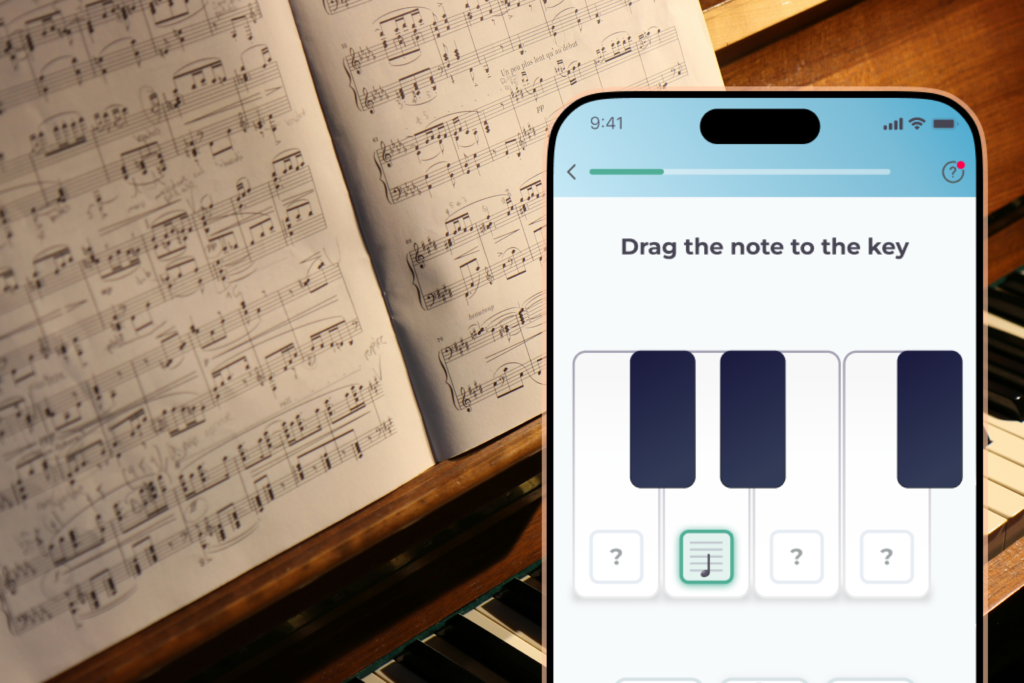
Conclusion — Turning Sight-Reading Into a Superpower for Everyday Life
Sight-reading is not just the ability to absorb information quickly; it becomes a real superpower through systematic training and a conscious approach. The brain adapts to new challenges, which means rewiring its neural connections, thus improving such cognitive functions as attention, memory, and the ability to hold an information flow. That the key to success is in regularity and proper organization of the process, keep in mind:
- Gradually complicate texts.
- Employ visualizations and interactivity.
- Never forget to check progress and celebrate each accomplishment.
Soon, when the skill of sight-reading will start to be included in your everyday routine, you will be astonished by how comfortably and confidently even the most complicated materials you can perceive. Such a skill will not only save your time but also make you more efficient in working, studying, and communicating. Your new superpower is sight-reading-only training it enough you need. Start today already, and results will not keep you waiting!
(Close with focused ear training blocks in the Talented app and applied listening tips to reinforce interval recognition and chord identification for long-term aural skill development.)